A Permaculture Tale from Vietnam
Don’t miss this spot if you ever go to Vietnam!
Since starting my permaculture journey three years ago, my approach to travel has transformed. Beyond seeking monuments, places of historic and cultural significance, and great food spots, I now also make it a point to visit permaculture farms and eco-businesses wherever I go. This adds a unique layer of understanding to each destination, revealing aspects of the local culture and environment that traditional tourist spots often overlook.
Just like that, during my last travel to Vietnam – I had kept aside an entire day to travel to a farm 40 km away from Hanoi. It was extremely difficult to find the farm online, which is primarily why I wanted to see it. It is usually these places that are hidden treasures, run by people who put all their time in growing the forest and no time in marketing it – those people have the best insights. So, I found the email ID of the farm owner on Facebook and reached out to him. Using translators and AI, he wrote back and we scheduled a time and date for the visit.
With a lot of difficulty and effort, I rented a scooter and drove an hour in the scorching heat of June to the Mother’s Farm. Only hoping all the way that my assumption of the farm being a hidden gem would be true.
And guess what, it was :)
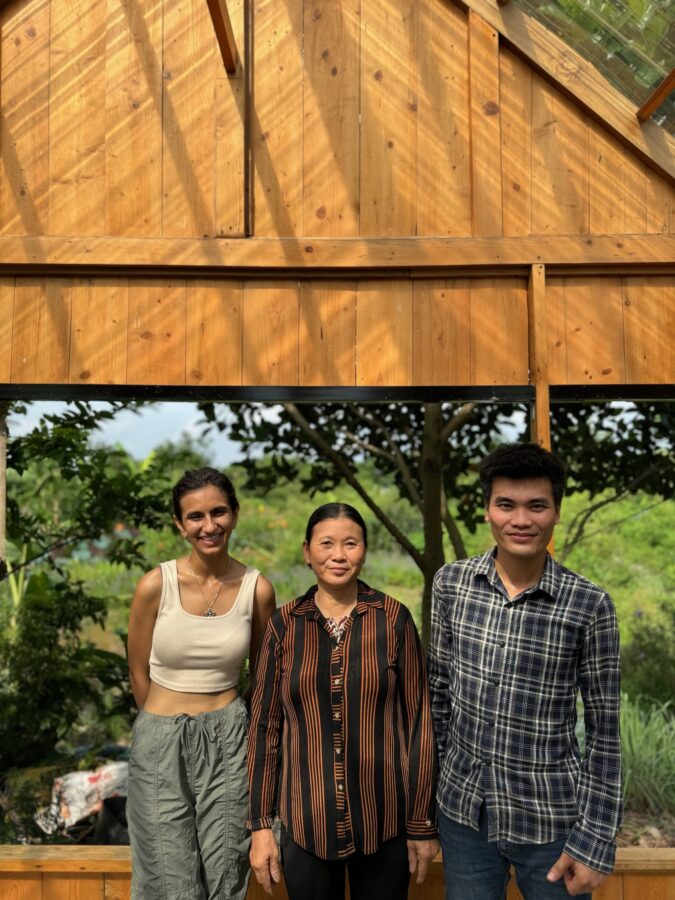
Mother’s Farm is a thriving one-acre farm established in 2018. Hoang, the owner of the forest garden, had concerns about the detrimental effects of chemical agricultural practices in Vietnam. This sparked his transformation from a conventional farmer to an advocate of regenerative organic farming.
Hoang’s worries began during his university years, where he observed the widespread use of chemicals in agriculture, leading to polluted land and water sources, and posing significant health risks to both producers and consumers. The cycle of overproduction, falling prices, and consumers’ reliance on low-quality, chemically treated agricultural products further aggravated the situation. High costs were also a result of multiple intermediaries in the distribution process.
Determined to find a solution, Hoang embarked on extensive research and discovered an effective agricultural model: Permaculture. He began by completing his Permaculture Design Certificate Course (PDC), and subsequently using the knowledge to transform his family’s farming practices. Today, Hoang and his mother primarily manage the farm, demonstrating a powerful family commitment to regenerative organic agriculture.
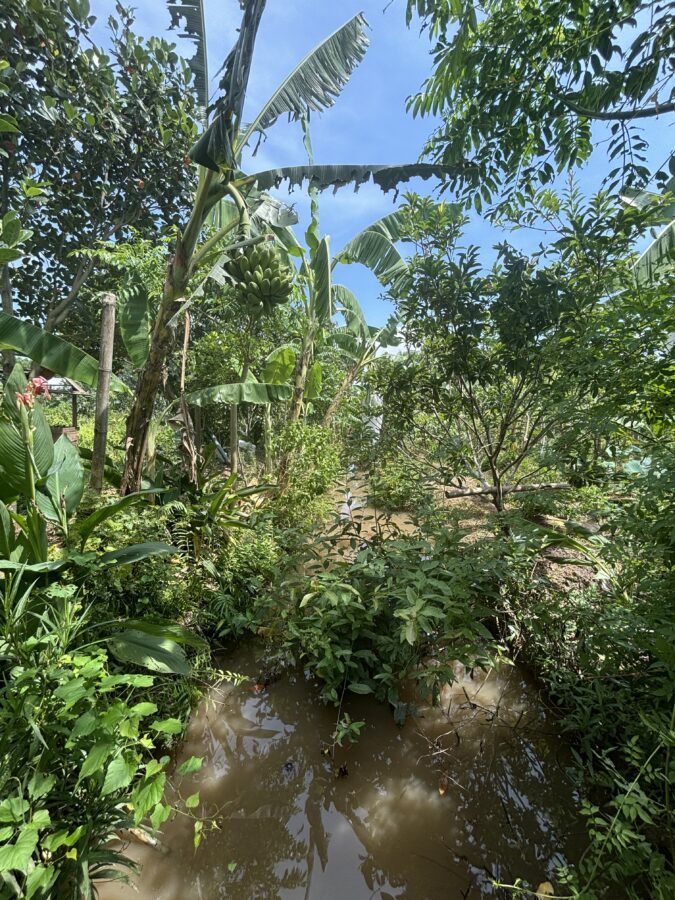
After three years of hard work, the results are evident. Hoang’s family forest garden thrives, producing a variety of agricultural products and clean food, eliminating the need to buy from outside sources. The surplus from the garden is shared and sold to the local community and city residents. The farm now boasts over 200 species of trees, with the most prominent and productive being indigenous species like jackfruit, pomelo, and guava, all of which are hardy and require minimal care. He has been smart to depend on these particular species for the majority of his harvest. This gives him the security to experiment with other species – without the fear of failure.
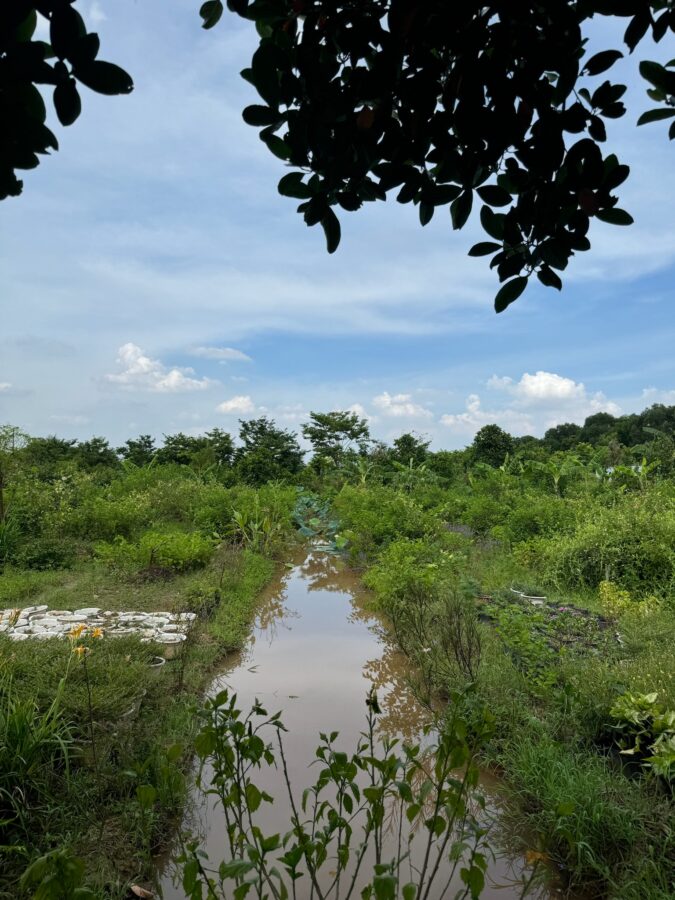
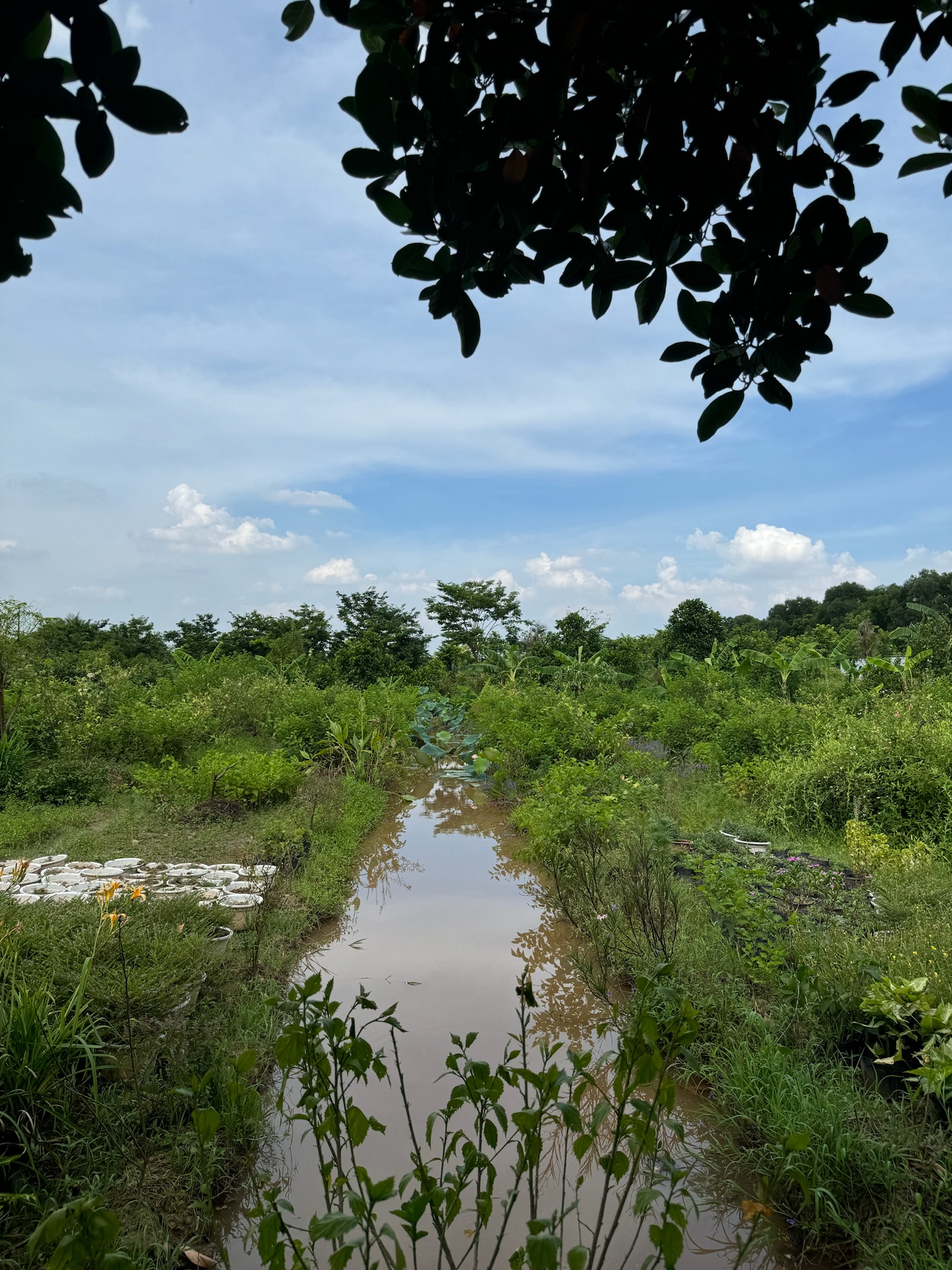
At Mother’s Farm, a diverse range of vegetables, spices, medicinal herbs, flowers, fruit trees, and companion plants are cultivated, all supporting each other’s growth and maintaining the natural balance of the garden’s ecosystem. All these plantations are done along an extensive swale channel. Half the swales run N-S, parallel to each other. In the other half of the land the swales run W-E, again parallel to each other.
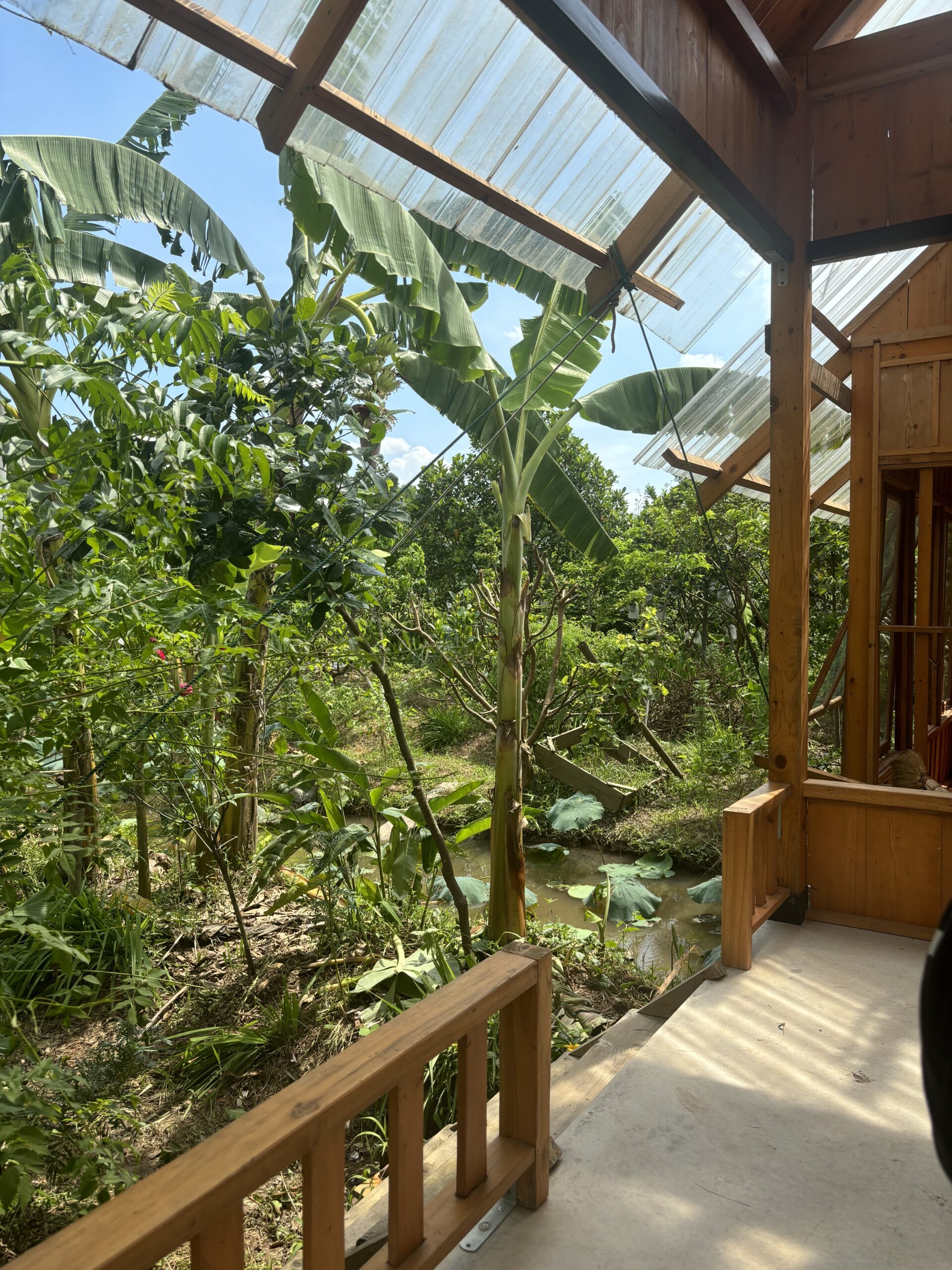
Since communication was difficult, I could not get a clear answer to why this is the way it is – but my assumption is that these were two separate farms with different land contours. Hoang joined them both and respected the land undulations of each, individually. This makes the view pretty dynamic since you are able to see a lot, and it does not appear like a monotonous view. On the other hand, it is still easy for them to work with. They have added a beautiful wooden semi-open cabin/work space to host guests for tea or small meals. It’s also a good space to host workshops if they decide to take that up in the future!
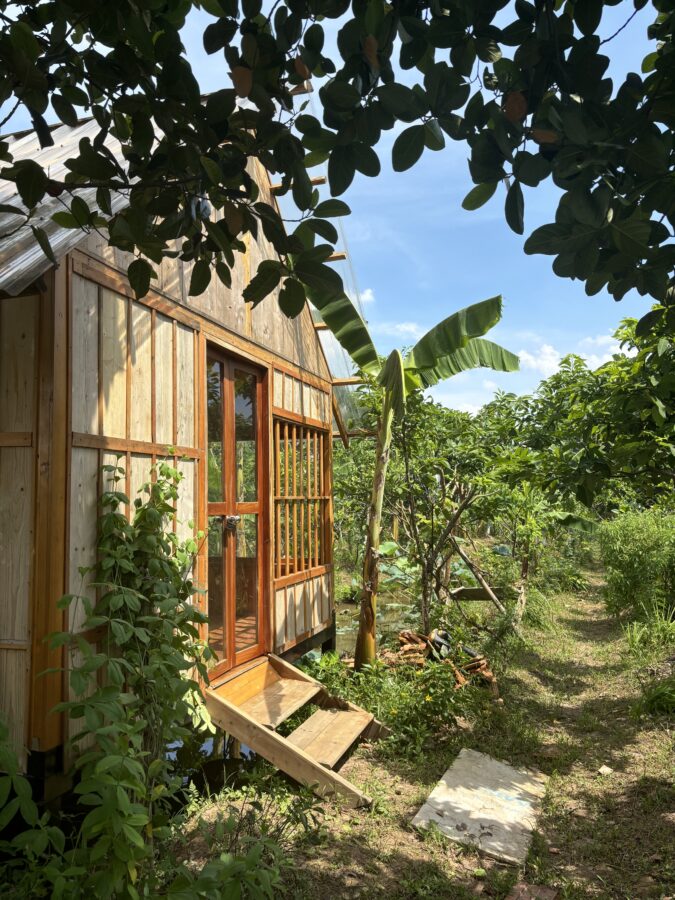
The harvest seasons vary, ensuring a steady supply of different products throughout the year, and avoiding the problem of overproduction. Hoang has also meticulously mapped and managed eight types of pests, such as leaf worms and stem borers, ensuring the health of his plants without resorting to chemicals.
Additionally, Mother’s Farm is a haven for wildlife, with over two dozen fauna species identified, ranging from dragonflies to iguanas. This biodiversity is a testament to the farm’s thriving ecosystem and Hoang’s dedication to creating a balanced, natural environment.
Mother’s Farm is a testament to Hoang’s dedication and the potential of Permaculture growing practices. His journey serves as an inspiring model for others, showcasing the benefits of healthy, environmentally friendly agriculture.
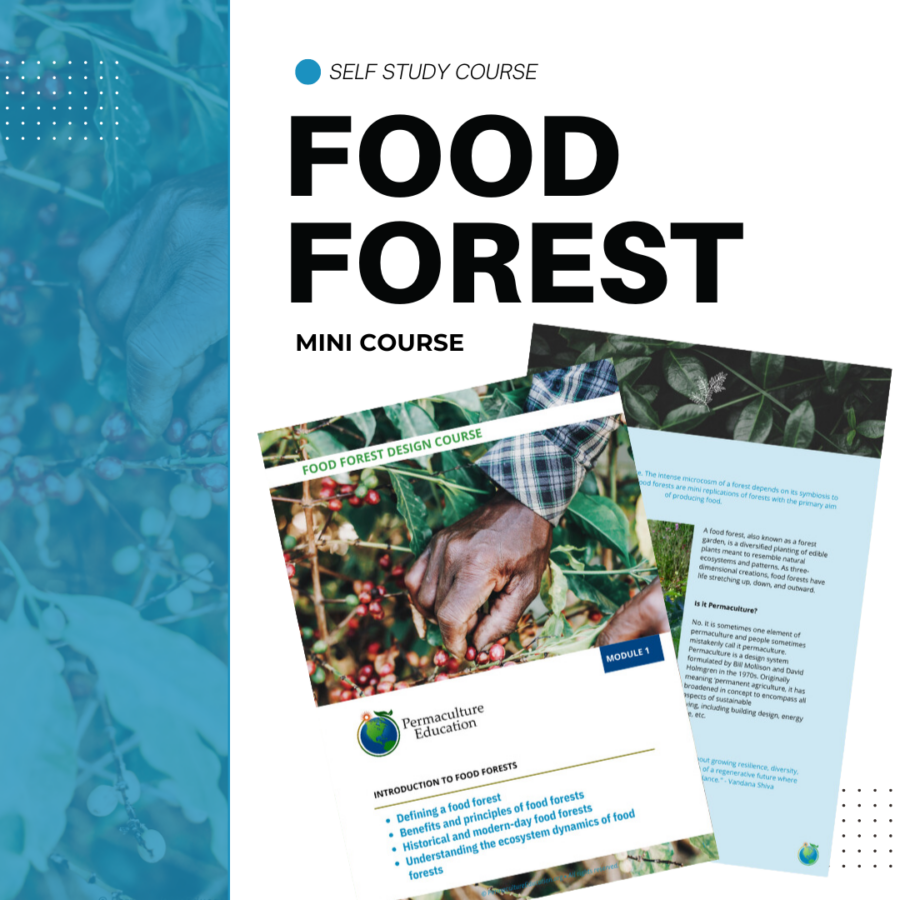
If you would like to learn how to grow your Food Forest, take a look at our Food Forest Design Mini Course. This self-study course is your gateway to cultivating thriving ecosystems and reaping the rewards of bountiful harvests. Whether you’re a gardening novice or an experienced grower, this course caters to all skill levels.
Permaculture Design is our ticket to a greener, happier planet. If you would like to learn more about regenerative design – become a certified Permaculture Designer with us!
