
A Ranch that Experiments, Evolves and Inspires
Do you ever feel that permaculture as a design tool can only help “plan farms and forests”? If this thought has crossed your mind even once, this is a must-read blog for you. This ranch in Costa Rica will help you understand how the concept of permaculture can be implemented to all levels of design, from grassroots “Farm planning” to large-scale community development.
Rancho Mastatal Sustainability Education Centre is a 300-acre wildlife refuge in the rural farming town of Mastatal, on the edge of the last remaining virgin rainforest. It has beautiful waterfalls, pristine rivers, idyllic swimming holes, impressive trees, 10 kilometers of trails, an extensive library, extraordinary wilderness views, and intact habitat for the area’s rich flora and fauna. It is an education center, working permaculture farm, ecolodge, and community rooted in environmental sustainability, meaningful, place-based livelihoods, and caring relationships. They practice, promote and teach natural building, fermentation, permaculture design, renewable energy, agroforestry, wilderness medicine and so much more.
Every single building in the centre is handmade, as a part of a volunteer experience or by the locals, to encourage community building and experimentation. The centre is a world-famous hub for informal learning. This kind of module that promotes subconscious learning, while doing daily chores, while talking to others, while just living your life, is what actually changes a person from within. Most of the people stay here, not for something luxurious but for a wholesome experience, with a passionate community, in hand-crafted rooms eating locally grown meals and connecting to raw nature.

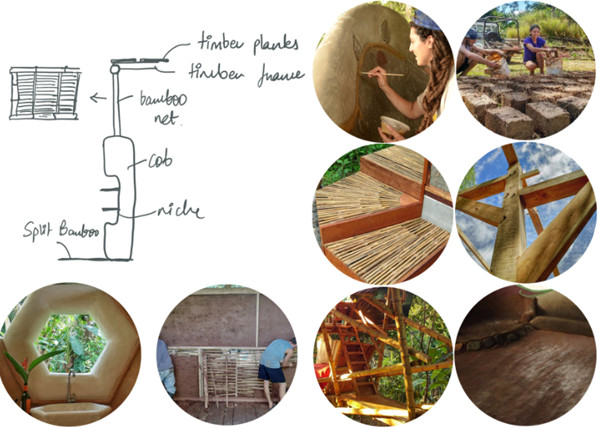
There is a cluster of buildings on the site which have developed organically, over the years as and when there was a need. Made by people from different parts of the world, the buildings use a myriad of techniques- cob, adobe, wattle and daub, bamboo frame, wood, metal and even recycled scrap. Residential facilities like bungalows, hostels, private rooms, workshops for wood and other crafts, goat barns, classrooms, lounges, dining spaces, libraries all these are semi-open structures, that enhance a user’s connection with nature such that you are never completely cut off from the outside.
Energy Conservation techniques
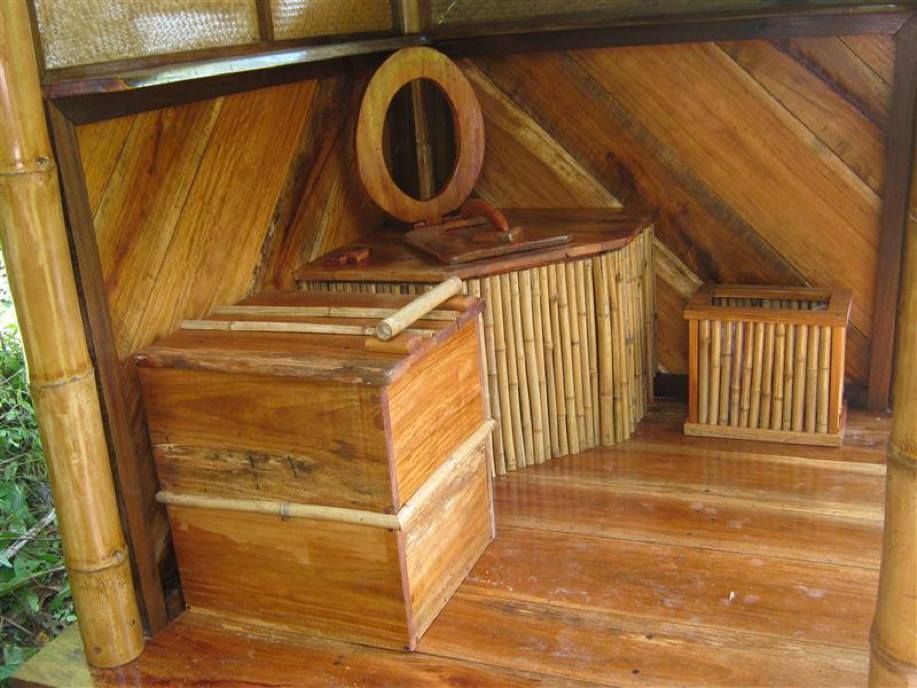
All buildings have shared compost toilets. The toilets are simply designed, easy to use, odor-free, beautiful and effective at producing tons of humanure each year. There is a biodigester toilet catering to the dining and kitchen space. All showers are common, in tadelakt finish, with solar heated water. Drain water is directed towards tree plantations through a well-organized pipe network which saves water, time and effort of maintaining the plantation.
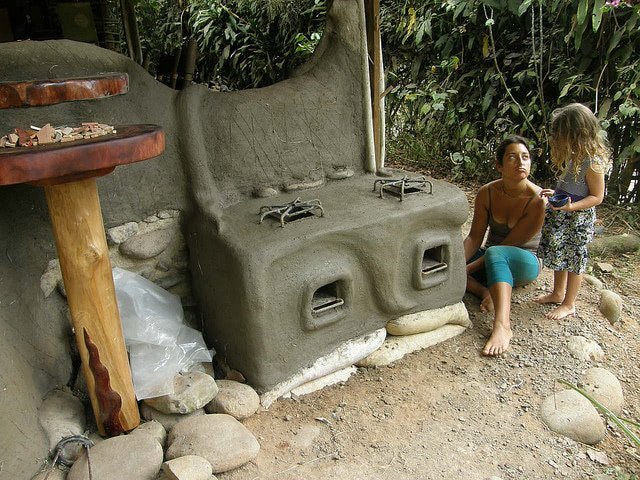
The eating/cooking area is the heart of the ranch. People cook/eat together which is the time where they bond, decide what to do next, share experiences and grow together. In order to save energy in the kitchen, new ideas are constantly explored. Few of them like the wonderbag have been adopted permanently. This ingenious yet simple cooking bag takes advantage of insulation to greatly reduce the amount of cooking fuel that one needs to use in their kitchen to cook. Simply heat up your dish using the cooking fuel of choice, but before it’s fully cooked, remove the dish from the heat source and place it in the wonder bag where it can finish slow cooking without adding anymore fuel. Their cob rocket stove also plays an integral role in cooking massive amounts of food. Rocket stoves are designed to be highly efficient and are mostly smoke-free, allowing you to take advantage of the abundant wood resources. What’s great is that they can even run-on pine tree needles.
The ranch has also been developing a regenerative agricultural system for 5 years now. Such comprehensive designs always require other intertwining systems like water management, erosion mitigation, and soil building techniques, alley cropping, swales, vetiver grass, biochar, mass leguminous tree plantings, and coppice agroforestry.
Multilevel application of the Permaculture Principles
Permaculture has three ethics – People Care, Earth Care, and Fair Share.
- Caring for the earth is the main premise and no decision is taken without keeping in mind the sanctity of the forest, the soil it is rooted in, and the air it breathes in.
- Interns, guests, students, owners, volunteers, needs of ever user are well thought of and catered to by the centre. From sleeping, to working, to eating, to talking, all activities have been planned to help them gain knowledge and experiences.
- Looking at the larger picture and how fair share comes into play, it’s important to note that the center has greatly benefited the entire town of Mastatal. The economy of this town is dependent on subsistence agriculture, eco-tourism, forestry/timber milling, and cattle. Consequently, there has been intensive deforestation from logging and pasture development for cattle leading to severe erosion and annual landslides. Rancho Mastatal made it a point to incorporate the locals and teach them about soil building, permaculture farming, and developing economies without destroying the earth. A number of successful permaculture-based, locally owned and operated businesses now exist in town. Apart from this, the ranch also raises money for small developments in the village.
This holistic approach of leaving no one and nothing behind, is helping the ranch grow towards a successful regenerative, self-sustaining future.
Saniya Malhotra is a Research Coordinator with the International Permaculture Education Center.
If you would like to know more about regenerative growth and permaculture, visit the International Permaculture Education Center and register for the official 72-hour Permaculture Design Certificate Course (PDC) today!