
Food Forests vs Orchards
The impacts of industrial agriculture are becoming increasingly visible—soil depletion, water scarcity, and biodiversity loss. Many growers are turning toward more regenerative models of food production. Food forests stand out as one of the most resilient and ecologically balanced systems ever designed. Yet, they are often compared with conventional orchards, which, while productive, embody a very different philosophy of cultivation.
Both food forests and orchards produce edible crops. However, the way they interact with the environment, manage resources, and support biodiversity differs drastically. One represents ecological mimicry, while the other represents industrial efficiency. Understanding these differences is crucial for anyone interested in regenerative agriculture or permaculture design.
Ecological Design and Structure
At the heart of a food forest lies the principle of ecological design—a method of cultivating food by imitating the natural structure and processes of a forest ecosystem. A mature food forest is a multi-layered system, typically composed of:
- Canopy trees (large fruit or nut trees)
- Sub-canopy or understory trees (smaller fruit trees)
- Shrubs (berries, medicinal plants)
- Herbaceous layer (culinary and medicinal herbs)
- Ground covers (living mulch plants)
- Vines and climbers (grapes, passionfruit, beans)
- Root crops (ginger, turmeric, carrots, sweet potatoes)
Each layer performs specific ecological functions—shading, soil enrichment, pollinator attraction, or moisture retention—creating a self-sustaining, interdependent system. In essence, a food forest is not planted for nature; it is planted with nature.
A conventional orchard, on the other hand, is designed for uniformity and control. Rows of single-species trees (often apples, oranges, or mangoes) are planted at measured distances for ease of irrigation, pruning, spraying, and harvesting. This design prioritizes predictable yields and mechanized management over ecological interaction. While efficient in the short term, it often leads to ecological fragility over time.
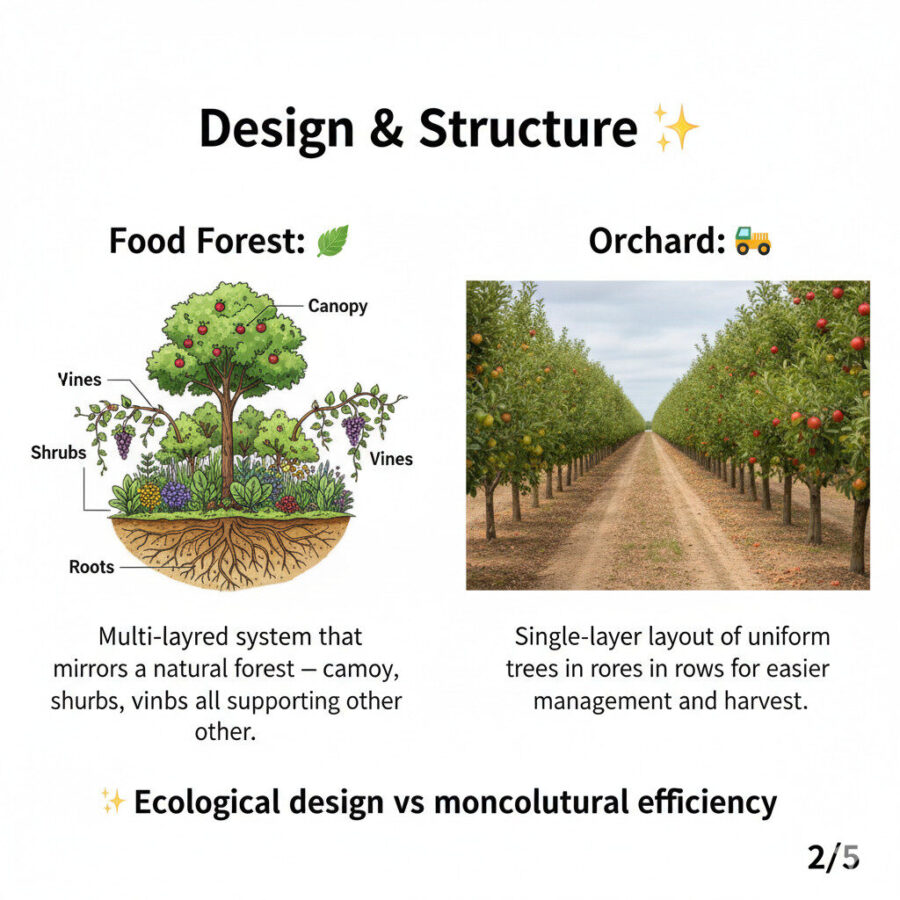
Source: Author(Left), Gemini (Right)
Biodiversity and Species Composition
Biodiversity is the foundation of resilience. A food forest is inherently biodiverse, containing a rich mix of plant species that support one another through mutualistic relationships. Nitrogen-fixing trees enrich the soil, flowering herbs attract pollinators, deep-rooted plants draw up minerals, and groundcovers prevent erosion. This network of life not only produces food but also stabilizes the ecosystem.
In permaculture terms, this is known as a guild—a grouping of plants and organisms that perform complementary roles around a central species, such as an apple or jackfruit tree. Together, they create a living web of productivity and protection.
By contrast, a conventional orchard often consists of one or two varieties planted across vast acreage. While this monocultural approach simplifies management, it also makes the system vulnerable to pests, diseases, and climate stress. With reduced genetic and functional diversity, one pest outbreak or drought can devastate entire yields, requiring more chemical inputs and human intervention to maintain productivity.
In short, biodiversity in food forests creates ecological resilience, while uniformity in orchards creates dependency.
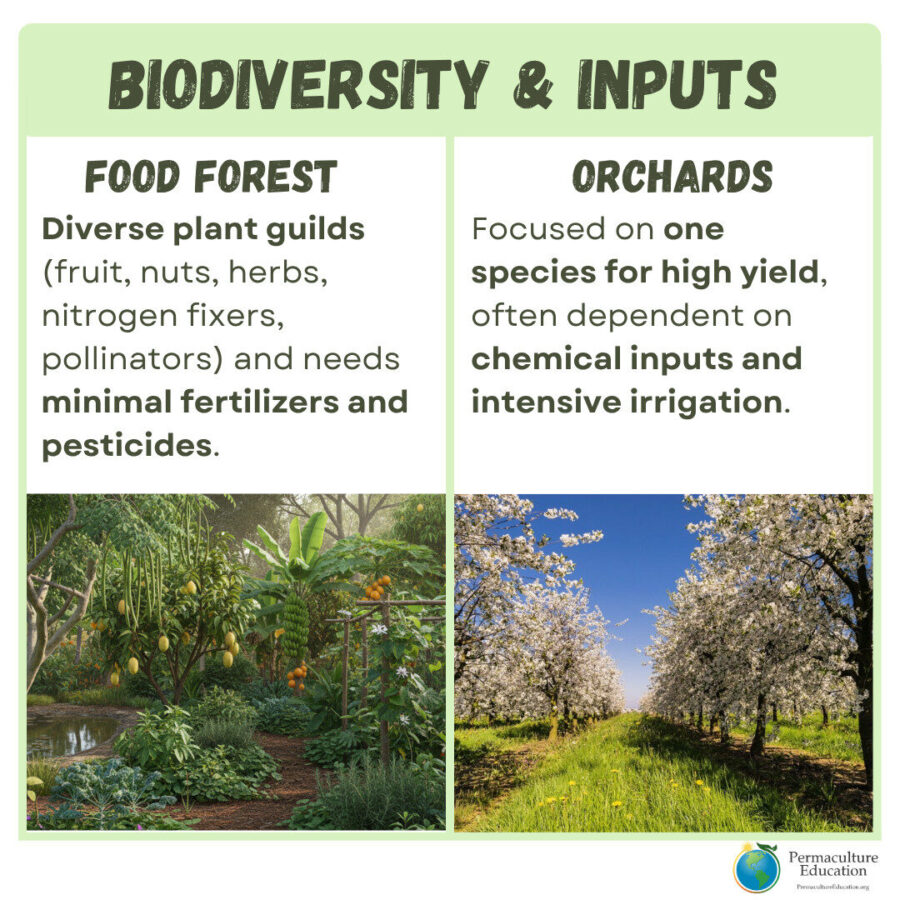
Source: Gemini (Left), Pixabay (Right)
Inputs and Maintenance
One of the most striking differences between food forests and orchards is the need for external inputs.
A well-established food forest functions much like a natural forest. Leaf litter turns into mulch and compost, enriching the soil. Deep-rooted plants draw nutrients from the subsoil and cycle them to the surface. Mycorrhizal fungi form symbiotic relationships with plant roots, improving nutrient uptake and water absorption. These internal cycles drastically reduce the need for fertilizers, pesticides, and irrigation. Maintenance becomes less about controlling nature and more about observing and guiding natural processes.
Conversely, a conventional orchard operates on a high-input model. Chemical fertilizers replace natural nutrient cycling. Pesticides and fungicides compensate for the lack of ecological pest control. Irrigation systems are needed to maintain yields, especially in arid regions. Machinery is required for pruning, spraying, and harvesting—each adding to financial and environmental costs.
While this system delivers high short-term productivity, it does so at the expense of long-term soil health and resource regeneration.
Source: Gemini
Productivity and Longevity
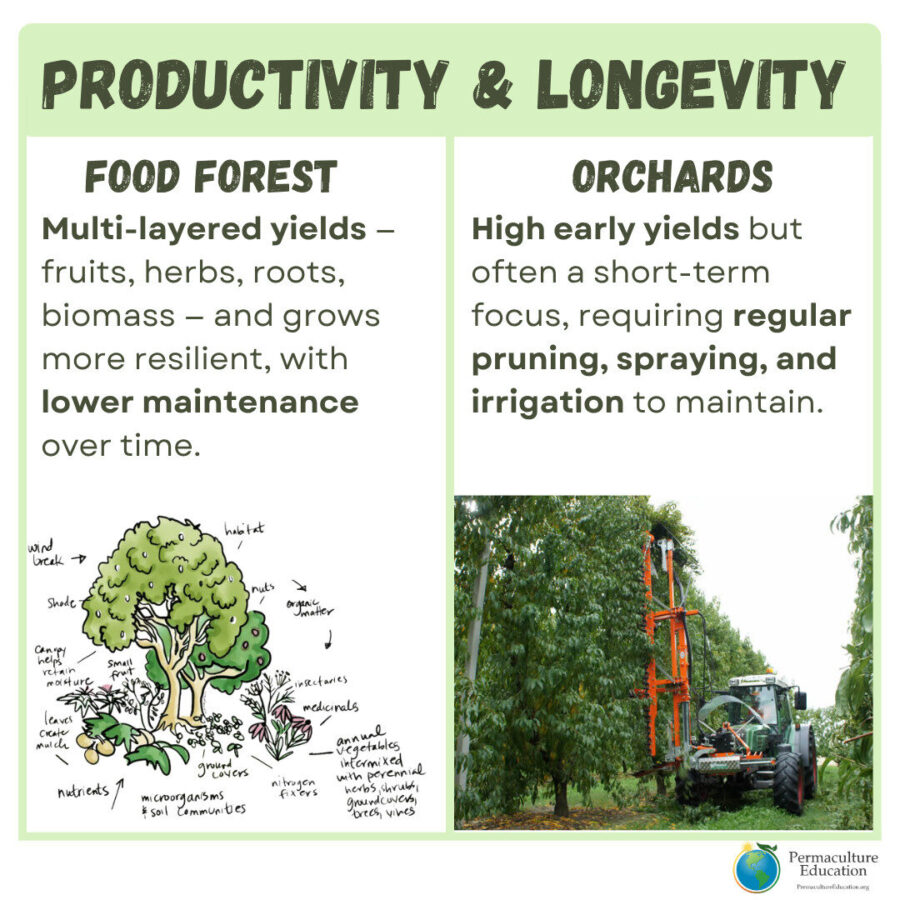
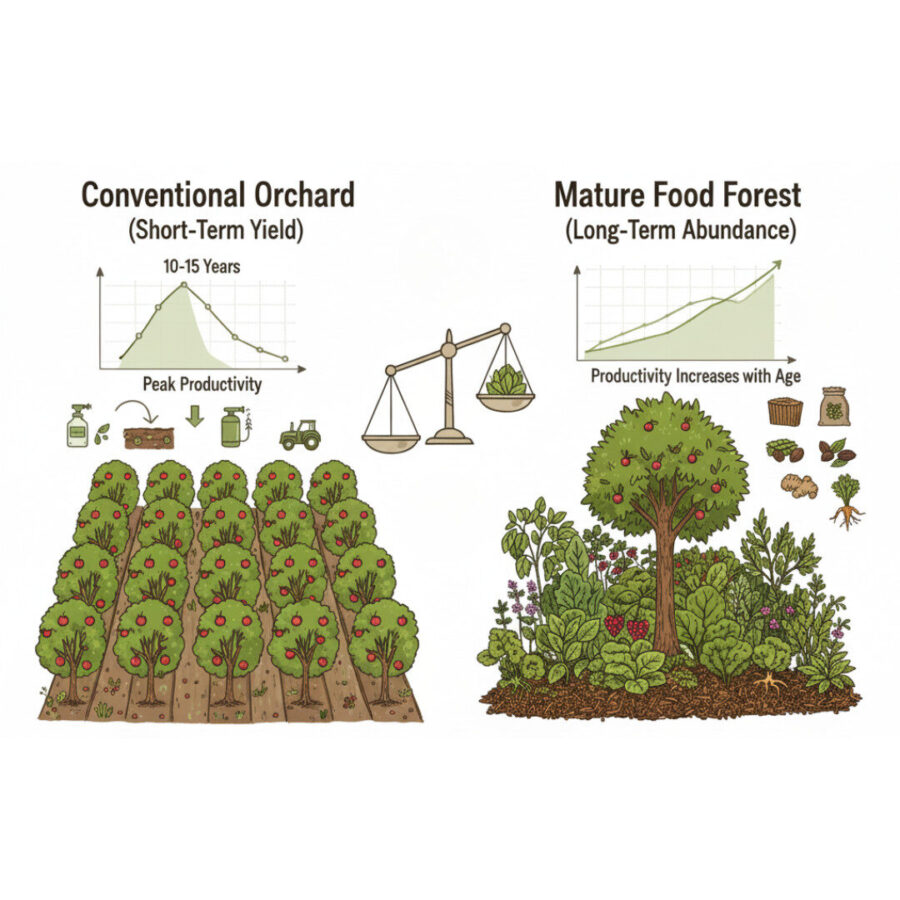
It’s a common misconception that food forests produce less than orchards. In the early years, yes—orchards yield faster because they are optimized for fruit production from uniform trees. But over time, food forests often equal or surpass orchard productivity, not just in quantity but also in the diversity of yields.
A mature food forest provides a multi-layered harvest throughout the year: fruits, nuts, herbs, leafy greens, roots, timber, mulch, and even medicinal plants. Each layer adds value, reducing dependence on a single crop. Moreover, because food forests rely on perennials rather than annual crops, their productivity increases with age instead of declining.
In contrast, conventional orchards have limited lifespans. Trees often peak in productivity after 10–15 years, after which they require replacement or heavy rejuvenation pruning. The land also degrades faster under chemical use and repeated tillage, leading to declining fertility over time.
Thus, while orchards deliver predictable short-term yields, food forests offer regenerative abundance and long-term stability.
Source: Gemini
Water and Soil Management
Water scarcity is one of the defining challenges of modern agriculture. Food forests are designed to retain and recycle water naturally, using techniques such as:
- Swales and contour bunds to slow water runoff and recharge groundwater.
- Thick mulching to reduce evaporation and keep soil moist.
- Dense planting that shades the ground and protects it from drying winds.
- Soil organic matter accumulation improves water-holding capacity.
Over time, these strategies turn degraded soil into a living sponge that can capture and store rainwater.
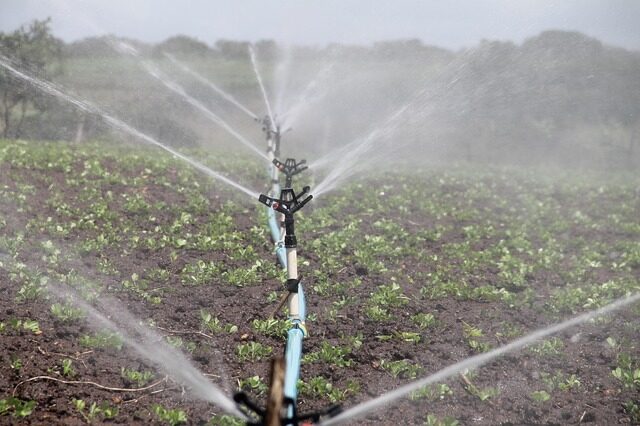
Conventional orchards, however, are often irrigation-intensive. Their open, tilled soil loses moisture quickly, and the absence of groundcover leads to erosion and nutrient loss. In many cases, orchards rely on groundwater extraction, depleting aquifers and increasing water stress in surrounding ecosystems. By mimicking the hydrological function of natural forests, food forests become climate-resilient ecosystems that enrich rather than exhaust their landscapes.
Source: Pixabay
Overall Regenerativity and Environmental Impact
When viewed through a regenerative lens, food forests and conventional orchards represent opposite ends of the agricultural spectrum.
Food forests are regenerative systems—they rebuild soil fertility, increase biodiversity, sequester carbon, and create self-perpetuating cycles of abundance. They align perfectly with the principles of permaculture and agroforestry, which prioritize meeting human needs by enhancing, not depleting, natural ecosystems.
Conventional orchards, on the other hand, are extractive systems. They depend on external resources—chemical fertilizers, fossil fuels, irrigation, and pesticides—to maintain yields. Over decades, this approach degrades soil, reduces biodiversity, and contributes to greenhouse gas emissions.
The difference is not just in design but in worldview:
- Food forests view the land as a living partner in regeneration.
- Orchards view the land as a production unit to be managed for output.
Comparative Overview
| Feature | Food Forest | Conventional Orchard |
|---|---|---|
| Design | Multi-layered, mimics natural forest | Single-layer, linear planting |
| Species Diversity | Very high; includes trees, shrubs, vines, herbs | Low; typically one crop species |
| Inputs | Low (self-sustaining) | High (fertilizers, pesticides) |
| Water Needs | Low due to retention systems | High, requires irrigation |
| Maintenance | Minimal, ecological balance | Regular pruning and spraying |
| Output | Diverse, multi-seasonal | Uniform, single-harvest |
| Sustainability | Regenerative, long-term | Extractive, short-term |
Conclusion: Regeneration Over Extraction
The contrast between food forests and orchards is more than agricultural—it’s philosophical. Food forests invite us to relearn the language of ecosystems, to cultivate food through cooperation rather than control. They offer not only food security but also ecological healing, carbon sequestration, and community resilience.
Orchards, while efficient and commercially viable, represent a system of dependence on external inputs and environmental cost. As climate uncertainty and soil degradation increase, the case for transitioning toward regenerative, forest-based food systems grows stronger.
In the end, food forests embody the essence of permaculture: systems that are productive, diverse, and regenerative—feeding both people and the planet for generations to come.
Want to learn more?
Explore the Food Forest Design Course by Permaculture Education to dive deeper into design principles, site planning, and species selection from real-world experts.