How to think like a forest
Post edited by Mani Makhija.
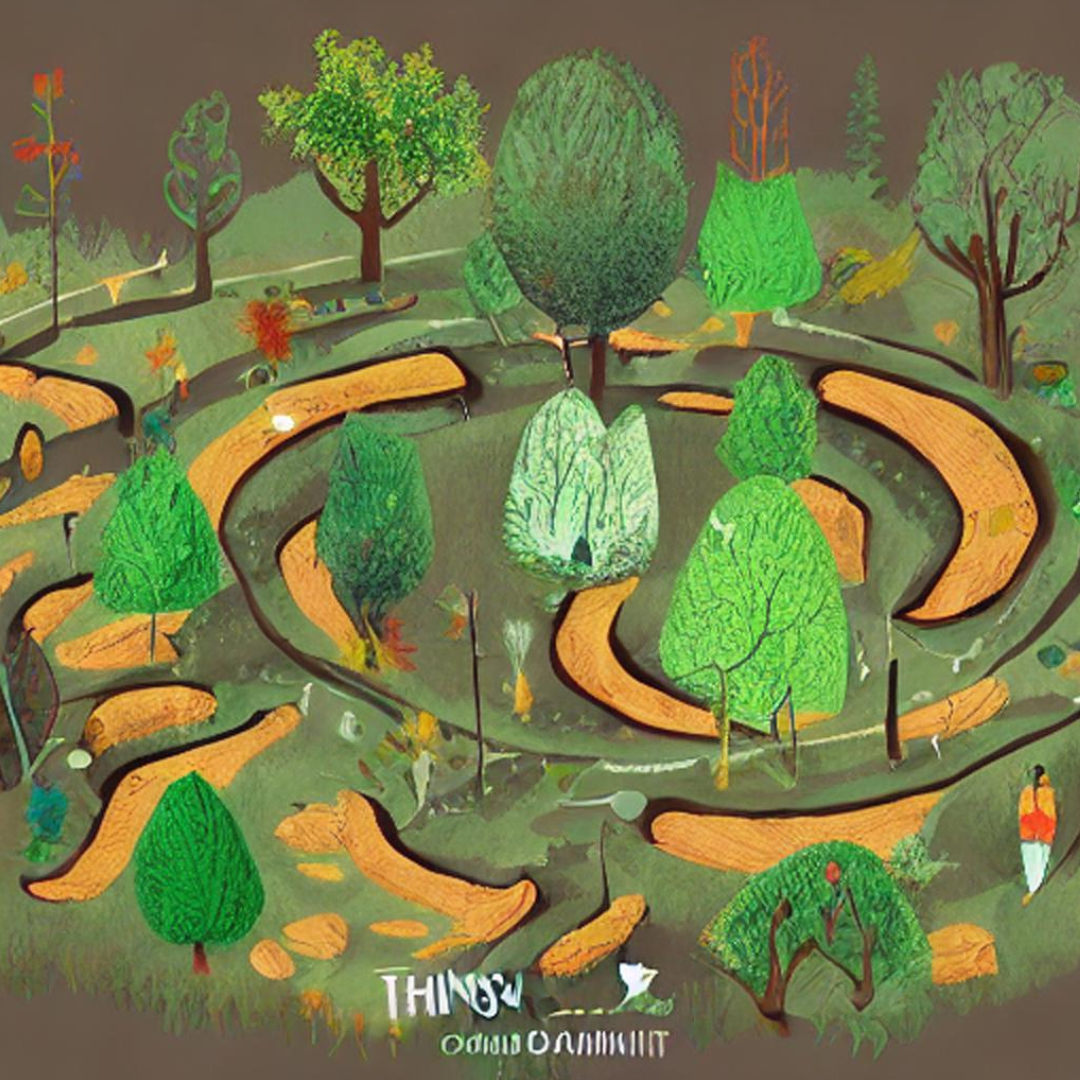
Have you ever enjoyed the harmony of nature when strolling in a forest? The interdependence of plants, animals, and trees results in a thriving environment. Have you ever considered the lessons forest management can teach us as individuals and business owners?
Adopting a holistic perspective on life and business entails thinking like a forest. It involves realizing how interconnected everything is and how we are all a part of a bigger system. Our personal and professional lives cannot flourish if one element is absent or out of balance, just as a forest cannot.
A wide variety of living forms flourish in forests. You may find new approaches to inspire inventive thinking, build support, and improve communication in your organization by thinking like a forest and knowing how a forest functions.
When asked about the lessons he had learned about business from the rainforest, Tachi Kiuchi, chairman and CEO of Mitsubishi Electric America, stated, “Rainforests would never be eligible for a loan due to their poor soil, lack of nutrients, and scarcity of resources. However, rainforests are more productive than any industry on earth because they are home to millions of different species of plants and animals that coexist harmoniously and develop into ever more complex forms. These environments succeed by making do with what they lack.
In forests, much diversity coexists in a lively, dynamic, and chaotic environment. Yes, there is competition, but it doesn’t follow the winner-takes-all model; instead, it keeps the system in balance. Like a forest, teams thrive when they support one another, collaborate, network, form partnerships, and work together. In a group context, thinking like a forest can help you become more resilient and happy while helping you adjust to change.
The ten principles that humans can learn from forest ecosystems and apply to our businesses and lives:
Embrace diversity
Forests are home to many species, each with its unique role in the ecosystem. From the towering trees to the smallest insects, every organism has a purpose and contributes to the health and balance of the forest. Similarly, diversity is key to the success of your life and business. Embrace different perspectives, skills, and backgrounds to create a thriving community that can adapt and grow together.
Collaboration and interconnectedness
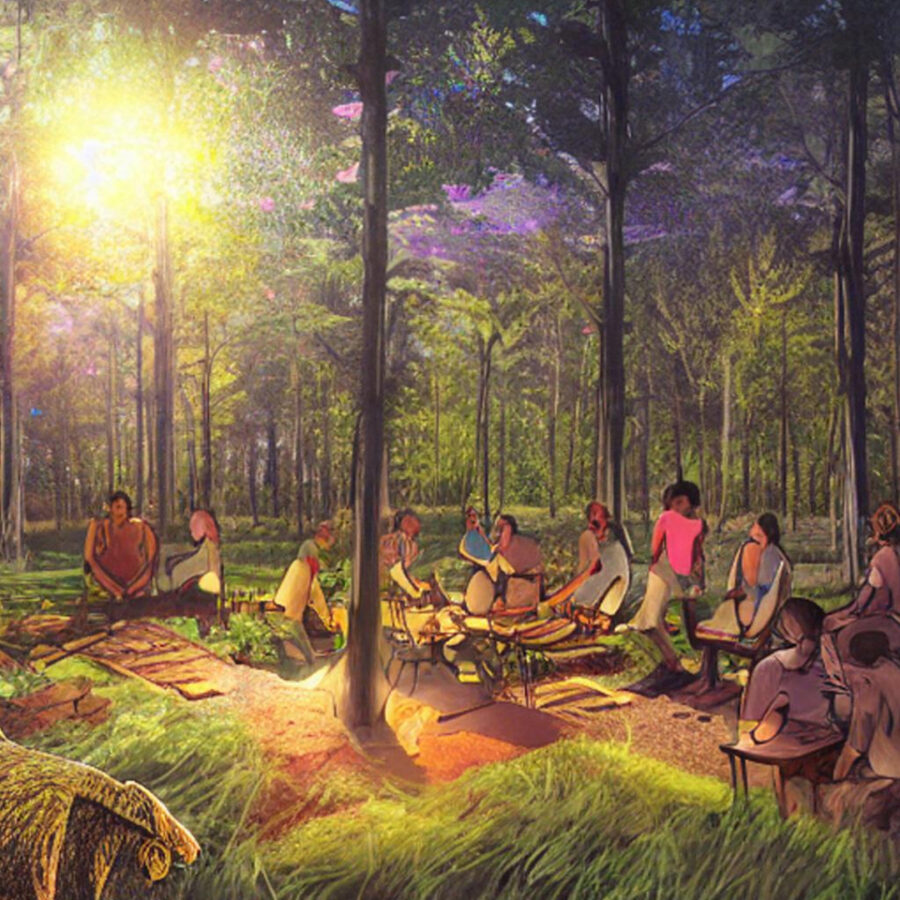
Forest ecosystems teach us that all living things are interconnected and interdependent. They show us the power of collaboration and cooperation, with trees and plants working together to share resources and support each other’s growth. We can apply this principle to our businesses and communities by fostering a culture of collaboration and teamwork and recognizing that we are stronger when we work together.
Nurture relationships
Forests rely on intricate relationships between species for survival. Trees share resources through a network of roots and fungi, animals pollinate plants and disperse seeds, and predators keep populations in check. In your life and business, building strong relationships is essential for success. Connect with others, build trust, and support each other to achieve your goals.
Some questions to ask yourself:
A forest’s communication system is supportive by design and works by passing the right information in the right way at the right time, so:
- What could you do to support fellow work and life partners in a way that is geared towards everyone’s positive well-being and mental health?
- What systems could you put in place to nurture support systems and communicate with each other better?
Resilience
Forests have evolved over millions of years to be incredibly resilient to change, adapting to new conditions and bouncing back from disturbances. We can apply this principle to our own lives and businesses by developing resilience and adaptability and learning to pivot and adjust when faced with unexpected challenges.
To be resilient and be able to support others in difficult times when there are scarce resources, a tree needs a strong core and to have stored up reserves.
In difficult times, core strength comes from finding out what matters to each of you as a group and what you each need. Knowing what matters and what’s needed—and acting on it—is what will see you through.
And when the time is right, to grow again. Trees do that in cycles.
A tree’s growth cycle follows the different phases of the year: shoots in spring, flowers in summer, fruit in autumn, and roots in winter. In autumn, a tree sheds its leaves and appears dormant, but to survive through the winter, much of the tree’s energy is spent growing its roots in search of water, oxygen, and nutrients so that it can spring back to life several months later.
Practice Regeneration:
Forests can remarkably regenerate and recover from damage or disturbance, such as wildfires or logging. We can learn from this by developing regenerative practices and systems that promote regeneration and renewal rather than exploiting resources for short-term gain.
Be adaptable
Forests face constant change, from natural disasters to human intervention. Yet, they have adapted over time to thrive in different environments. Being adaptable can help you navigate challenges and seize opportunities. Stay open to new ideas, be willing to learn and evolve, and take risks when necessary.
Some questions to ask yourself:
Trees in a forest are constantly responding to change by working on what matters and what they need, so:
- Do you know what matters and what your core values are, individually and collectively?
- We all need reserves – so what have you stored up for the winter? What is in your store cupboard?
- How and where can you create space?
Balance:
Finally, forests teach us the importance of balance. Each species plays a role in the larger ecosystem and maintains a delicate balance of resources and energy. We can learn from this by striving for balance in our lives and businesses, recognizing the importance of rest, recovery, and self-care, and striving for a balance between work, family, and personal pursuits.
Holistic thinking:
Forest ecosystems operate as a complex and interconnected whole, with each species playing a role in the larger system. We can learn from this by adopting a holistic approach to problem-solving and decision-making and recognizing the importance of considering our actions’ broader context and implications.
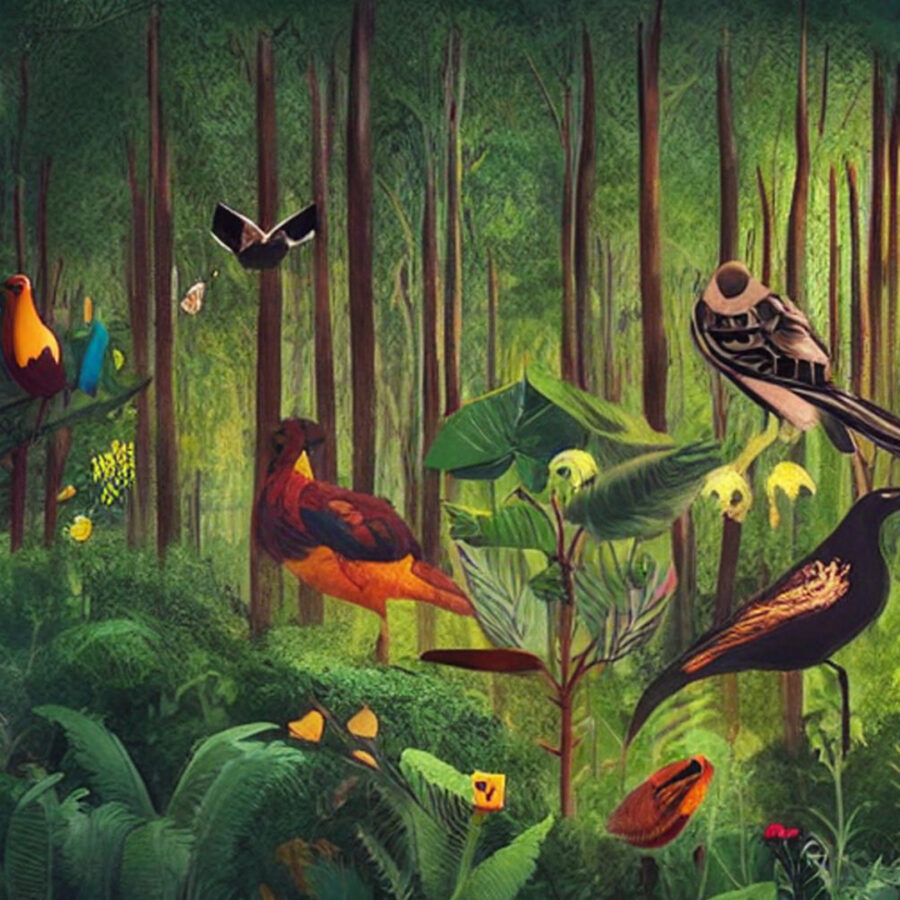
Birds are highly interactive and vital members of forests. They help trees grow by reducing the effect of insect predators, play a critical role in dispersing seeds and nuts, and are important tree pollinators.
In return, forests provide food, nesting sites, and warmer homes for birds.
As an example of an organization with innovative principles, Buurtzorg is a very successful Dutch healthcare business that grew from 4 to 10,000 people in 9 years (!) whilst retaining a more personal way of delivering health and looking after each other.
They follow the following guidelines, which have helped them achieve amazing success:
- Small self-managing teams with a lot of responsibility are used to run Buurtzorg.
- Within their teams, major decisions are made collectively without a leader.
- Conflict resolution and peer coaching are taught to the entire team.
- All performance information for the teams is disseminated on the company intranet. A struggling team can speak with a successful team to acquire suggestions and best practices. They do.
- The CEO publishes his suggestions on the company’s internal social media when making decisions that have an impact on every employee. These posts receive dozens of replies. If there is consensus among the comments, the choice is determined relatively quickly—within hours. If not, the proposal is modified and put forth once more. Or a working group is formed to improve it. They are able to lead and make decisions more effectively as a result, and everyone remains involved and cooperative.
Thinking like a forest can help you create a more regenerative, resilient, and thriving life and business. Embrace diversity, nurture relationships, be adaptable, practice regeneration, and collaborate for success. By applying nature’s wisdom, you can achieve your goals while contributing to the health and well-being of the world around you.
To address our fundamental requirements for food, shelter, comprehensive social structures, and regenerative economies, permaculture combines knowledge and abilities from numerous ecological disciplines, both old and modern. Permaculture Design focuses on making human settlements that are regenerative and supportive of all. Since cultures cannot last for very long without a regenerative agricultural base and a land use ethic, the word is a contraction of both permanent agriculture and culture. Permaculture is concerned with some level of water, energy, communications, buildings, animals, and infrastructure. But permaculture is not about these things per se; rather, it is about the connections we can make between them by arranging them in the landscape and society.
Permaculture is based on observing natural systems, the wisdom contained in traditional farming systems, and modern scientific and technological knowledge. The old motto “Natura mater et magistra” — Nature is both mother and teacher — applies to everything.
Growing with nature is a wonderful approach to a permaculture lifestyle, and we hope we can inspire you to do so! If you want to learn more about Permaculture Design or how to offer your business services more regeneratively, become a certified Permaculture Designer with us!